

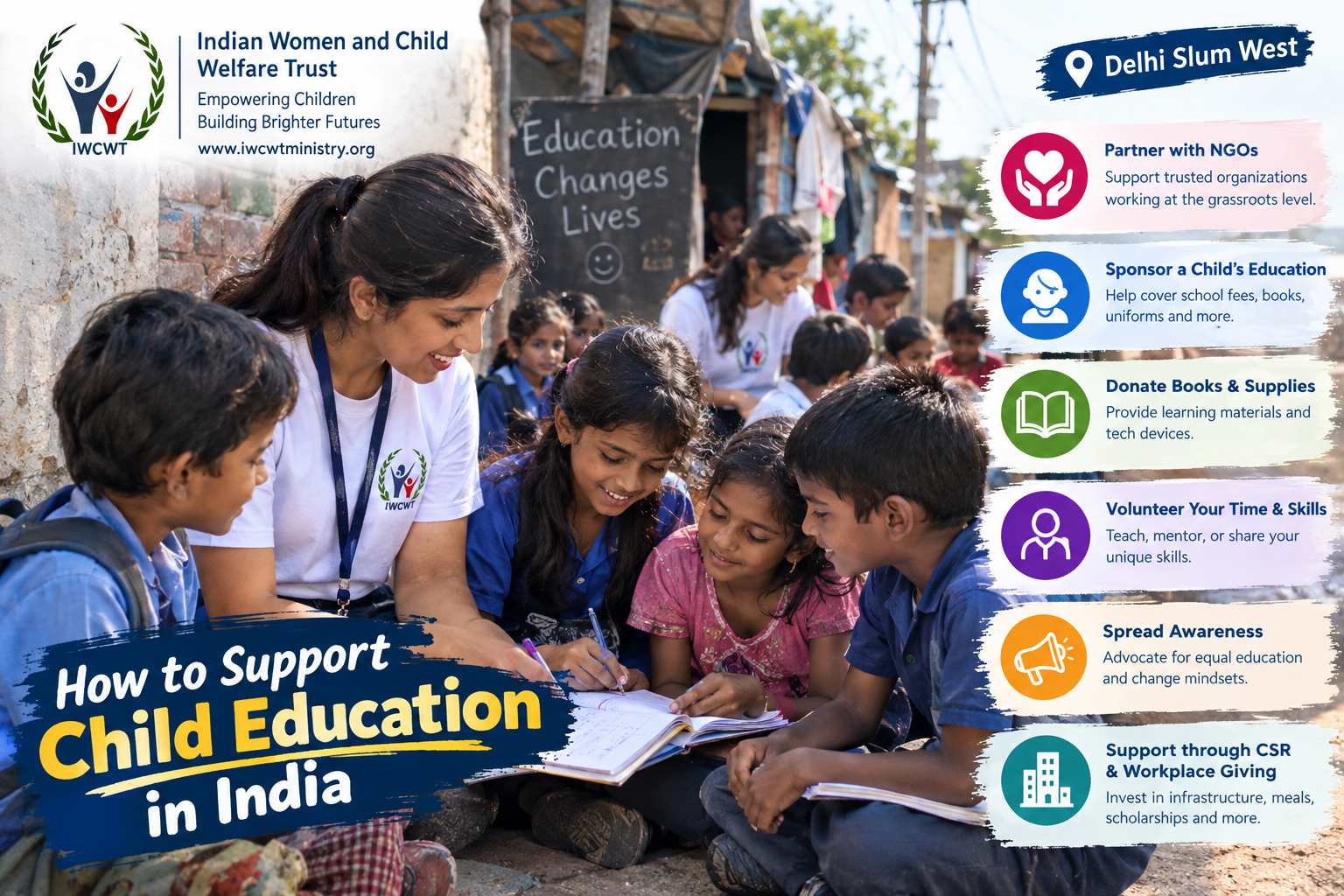
Support Child Education in India
Education is widely celebrated as the cornerstone of personal growth, economic mobility, and national progress. In India, tremendous strides have been made to boost school enrollment rates and build educational infrastructure. Yet, millions of children—particularly in rural areas, urban slums, and marginalized communities—still struggle to access quality learning. Issues ranging from poverty and child labor to a lack of basic school supplies keep countless young minds out of the classroom.
If you have ever wondered how you can make a tangible difference, you are not alone. Here is a practical guide on how you can actively support child education in India and help bridge the gap.
1. Partner with Grassroots NGOs and Non-Profits
Many non-governmental organizations (NGOs) work directly at the community level to identify out-of-school children, provide remedial coaching, and supply learning materials. Organizations like the Indian Women and Child Welfare Trust (IWCWT) and various children’s trusts work tirelessly to ensure that underprivileged children receive not just formal schooling, but also moral support, health guidance, and non-formal education.
How to help: Research reputable, transparent non-profits and set up a monthly recurring donation. Regular contributions allow these organizations to plan long-term educational interventions rather than relying solely on sporadic funding.
2. Sponsor a Child’s Education
Many education-focused charities offer child sponsorship programs. When you sponsor a child, your financial contribution typically covers school fees, books, uniforms, stationery, and sometimes even nutritional support.
The Impact: This direct, personal connection ensures that a child from an economically disadvantaged family doesn’t have to drop out due to sudden financial strain.
3. Donate Books, Tech, and Learning Supplies
Schools in low-income neighborhoods and community learning centers are often under-resourced. They constantly need materials like notebooks, pens, geometry boxes, school bags, and science kits. Furthermore, with the digital shift in education, older devices (like functional tablets, laptops, or smartphones) can change a child’s learning trajectory.
How to help: Organize a school supply drive in your neighborhood, office, or apartment complex, and partner with a local NGO to distribute them where they are needed most.
4. Volunteer Your Time and Skills
Financial contributions are vital, but time and human capital are equally powerful. If you have a few hours to spare each week, consider volunteering:
Teach or Tutor: Offer after-school tutoring, basic English or math coaching, or computer literacy classes.
Skill Sharing: If you have skills in art, music, storytelling, or sports, conduct interactive workshops to boost confidence and holistic development.
Digital Volunteering: Help NGOs with content writing, social media management, translation, or graphic design to amplify their reach and fundraising efforts.
5. Spread Awareness and Advocate
Education advocacy is about shifting mindsets. In many marginalized communities, children are pulled out of school early to work or assist with domestic chores, or young girls are discouraged from pursuing higher education.
How to help: Use your social media platforms to highlight educational inequalities, share success stories of underprivileged children who beat the odds, and encourage others to get involved. Local advocacy—talking to families about the long-term value of schooling—can also shift community perspectives.
6. Corporate Social Responsibility (CSR) and Workplace Giving
If you are a business owner or a corporate professional, leverage your workplace ecosystem.
Encourage your company to allocate CSR funds toward building school infrastructure, setting up digital labs, or funding mid-day meal and scholarship programs.
Set up payroll-giving programs where employees can voluntarily contribute a small percentage of their salary to a trusted child welfare organization.
7. Create Safe and Supportive Learning Environments
Children learn best when they feel safe, encouraged, and supported both inside and outside the classroom. Beyond providing school fees and educational materials, communities can help create spaces where children have access to quiet study areas, mentoring, positive role models, and opportunities to express themselves.
- How to help: Support community learning centers, organize reading clubs, provide age-appropriate books, or mentor children who need additional academic and emotional encouragement. Even creating a small, welcoming space for children to read and complete their homework can make a meaningful difference in their educational journey.
